 HEAVY DUTY
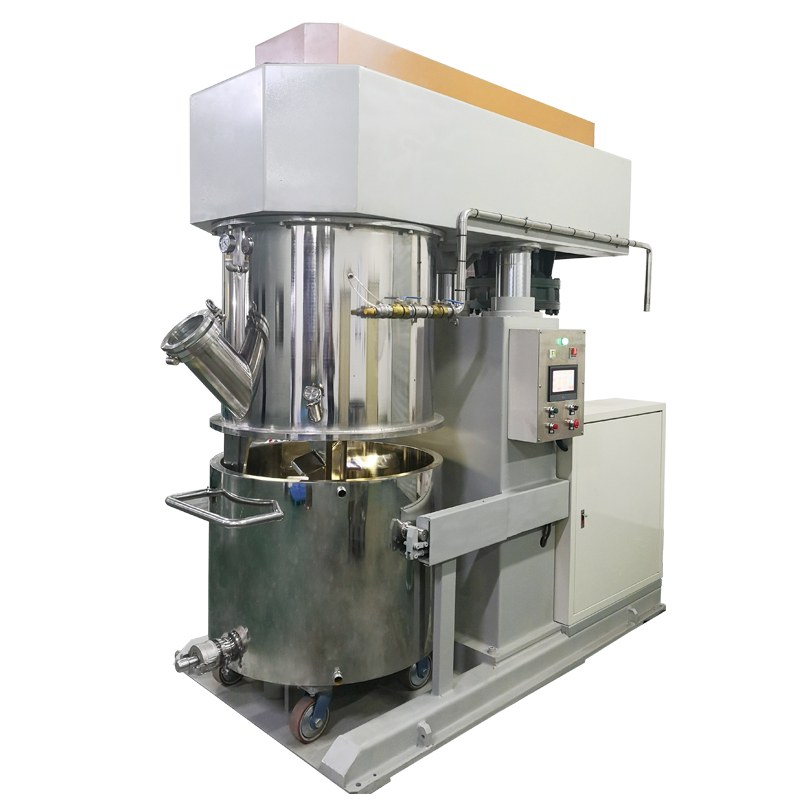
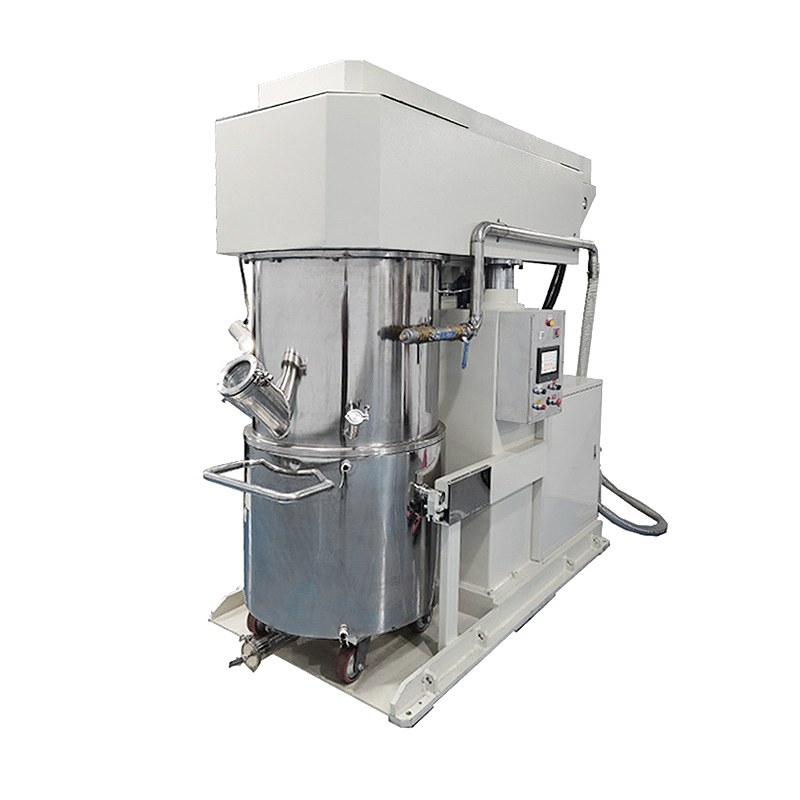
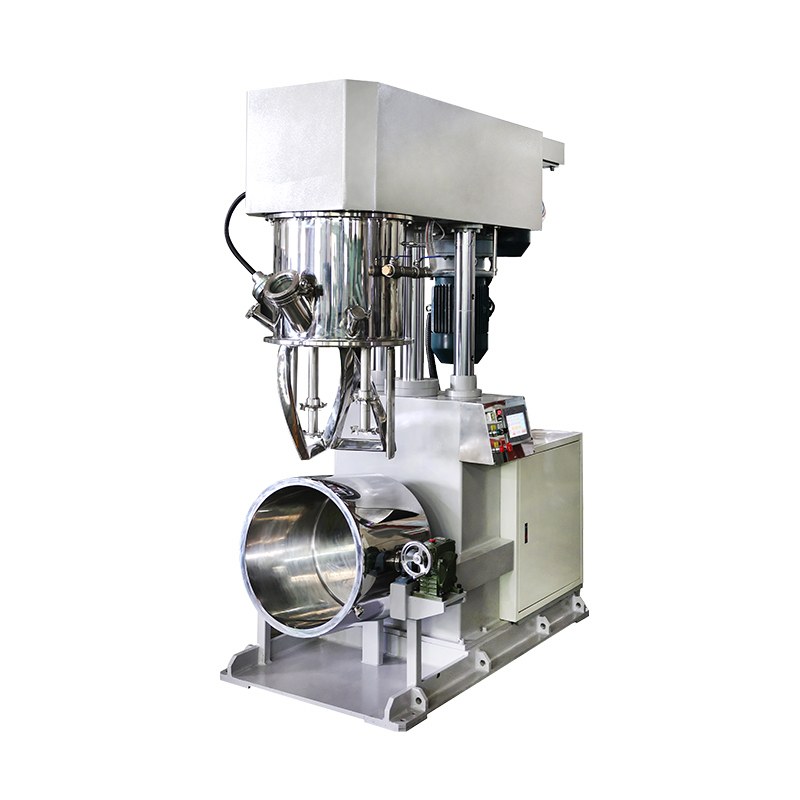
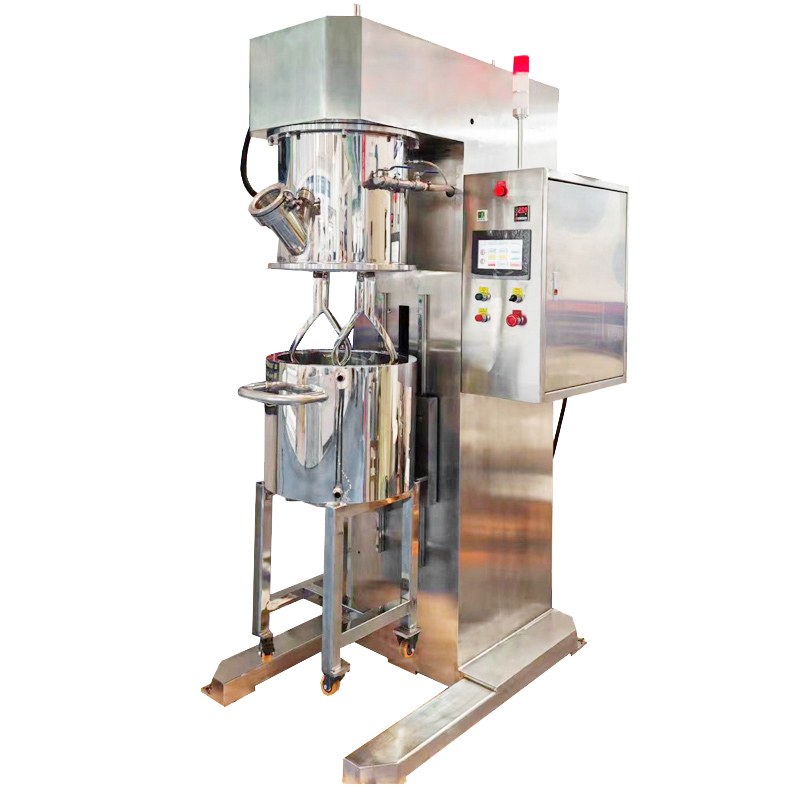
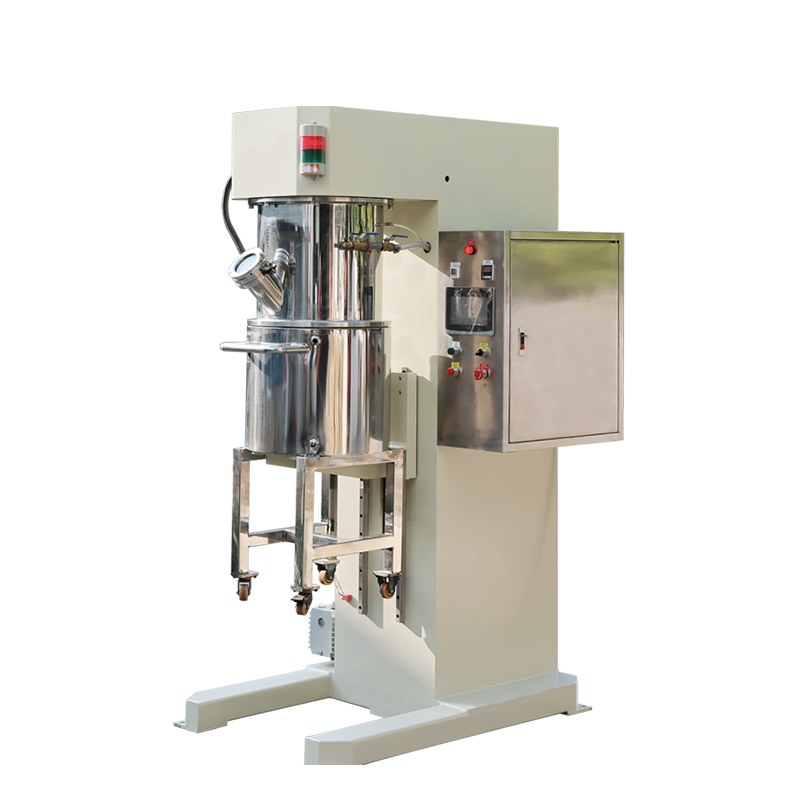
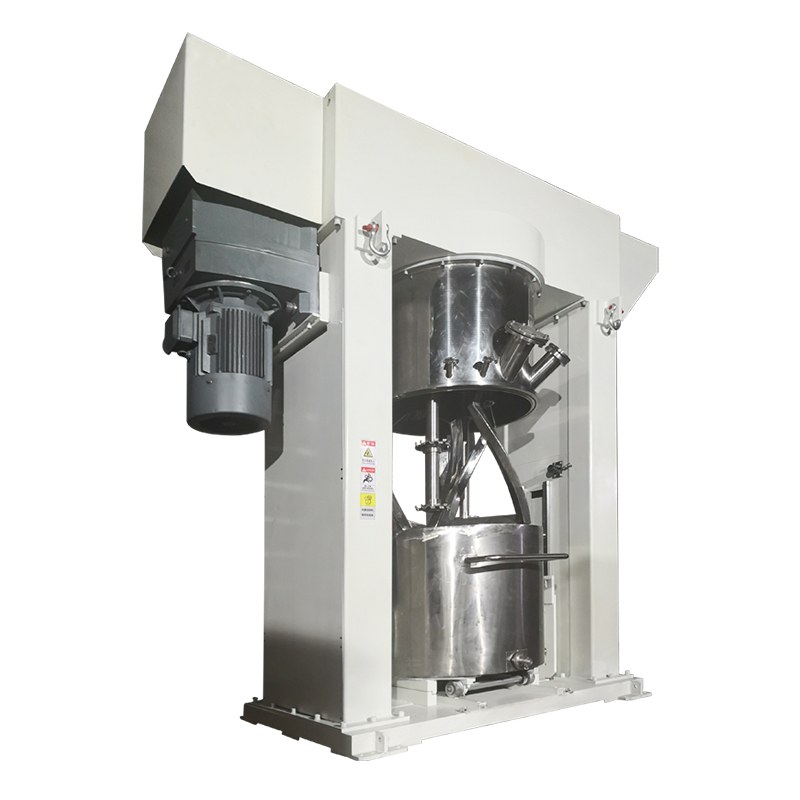
650 L Gantry Vacuum Dual Planetary Mixer
MODEL: RJ-JBC-650L-G // CE CERTIFIED
A 650-liter dual planetary vacuum mixer for high-viscosity technical pastes — conductive adhesives, solder paste, battery slurry and electronic pastes — with weld-free die-cast twist blades, a 23.2 m/s disperser and a jacketed vacuum vessel.
Technical Specifications
Gantry frames for the largest vessels, where a cantilevered column would be impractical and the vessel itself has to be handled.
| Parameter | Specification Value | Engineering Notes |
|---|---|---|
| Total Volume | 650 Liters | Jacketed vacuum vessel |
| Frame | Gantry, twin-leg | Vessel positioned under the mixing head |
| Disperser Linear Speed | 23.2 m/s | Maximum at the stated disperser speed |
| Blade Construction | Single-piece die-cast twist blade, weld-free | Folding blade version available |
| Vacuum Instrumentation | Panasonic digital vacuum gauge | Standard on all models |
| Temperature Sensing | PT100 sensor, product contact | Standard on all models |
| Vessel Jacket | Double layer + flow-guide groove | Cooling water or heat-transfer oil |
| Maximum Heating | ≤ 200 °C | External insulation required above 60 °C |
| Control System | Touch-screen HMI + PLC, VFD drive | Recipe storage and repeatable ramp |
Key Design Features
A different structure, not a scaled-up column machine: the frame spans the vessel and the vessel is positioned underneath it.
Frame Spans the Vessel
On 300 L and 650 L vessels the mixing head is carried on a gantry rather than a single column. Load is distributed across two legs, which keeps deflection at the blade tip within tolerance at full vacuum load.
21 to 23.2 m/s
The largest discs run fastest: 21 m/s at 300 L and 23.2 m/s at 650 L. That is the shear regime needed to wet out high filler loadings in a vessel this size.
Designed Around the Vessel, Not the Machine
With a gantry the vessel can be brought in on its own trolley or rail system rather than lifted into a fixed frame, which is what makes a 650 L batch practical to load and discharge.
Same Instrumentation as Smaller Frames
Panasonic digital vacuum gauge, PT100 in the product, double-wall jacket with flow-guide groove and a 200 °C heating limit — identical instrumentation across the range, so operating practice does not change with size.
Where the Gantry Frames Fit
Bulk paste production where the batch weight, not the floor area, sets the machine size.
Battery Slurry
Production-scale anode and cathode mixing where a single batch feeds a full coating run.
Sealants and Structural Adhesives
Highly filled, high-viscosity compounds that will not flow on their own and have to be pressed out of the vessel.
Conductive Adhesive
Bulk silver-filled adhesive where the cost of entrained air in scrap is measured in kilograms, not grams.
Thermal Interface Paste
Very high filler loadings that need maximum tip speed and a jacketed vessel to hold viscosity through the dispersion step.
Frequently Asked Questions — RJ-VPM-500L
Common engineering inquiries regarding vacuum retention, viscous material discharge, cleanroom compliance, and global FAT sign-off.
Q1. Why is disperser linear speed quoted instead of rpm?
Tip speed, not shaft rpm, sets the shear a paste actually sees. 23.2 m/s is the published maximum for this frame; two machines with different disc diameters running the same rpm give the paste very different energy input.
Q2. Can the same vessel cool and heat?
Yes. The double-wall jacket with its bottom flow-guide groove accepts either cooling water or heat-transfer oil. Heating is limited to 200 °C, and when the process runs above 60 °C the vessel is wrapped with insulation at the factory, which must be declared when ordering.
Q3. What discharge options are there?
Bottom discharge or front discharge, fixed at order. Bottom discharge suits gravity-fed lines; front discharge suits vessels served by a press-out unit or transfer pump.
Related Processing Equipment
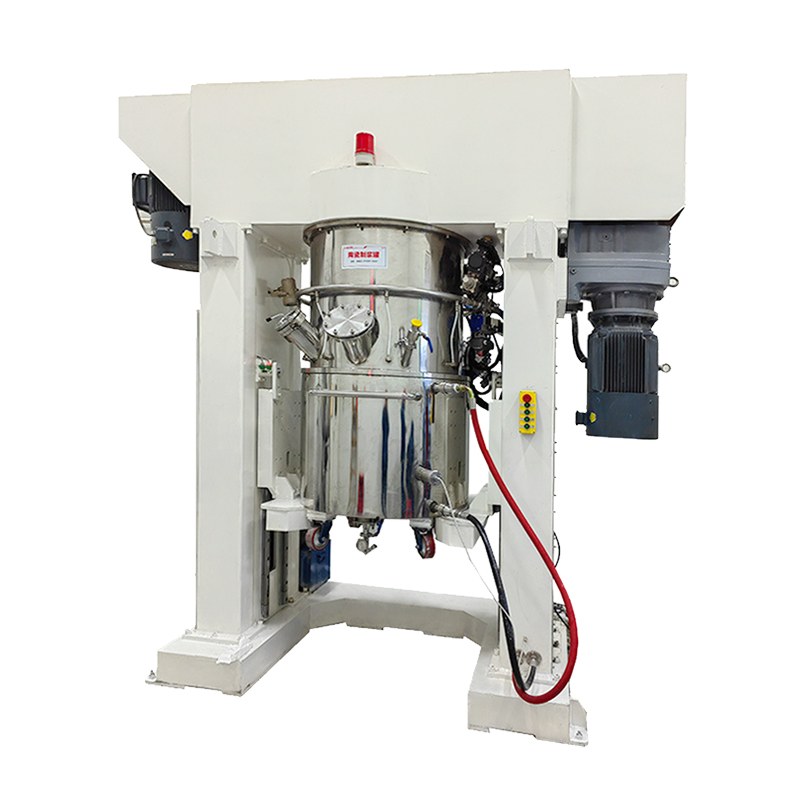
300 L Gantry Vacuum Dual Planetary Mixer
A 300-liter dual planetary vacuum mixer for high-viscosity technical pastes — conductive adhesives, solder paste, battery slurry and electronic pastes — with weld-free die-cast twist blades, a 21 m/s disperser and a jacketed vacuum vessel.