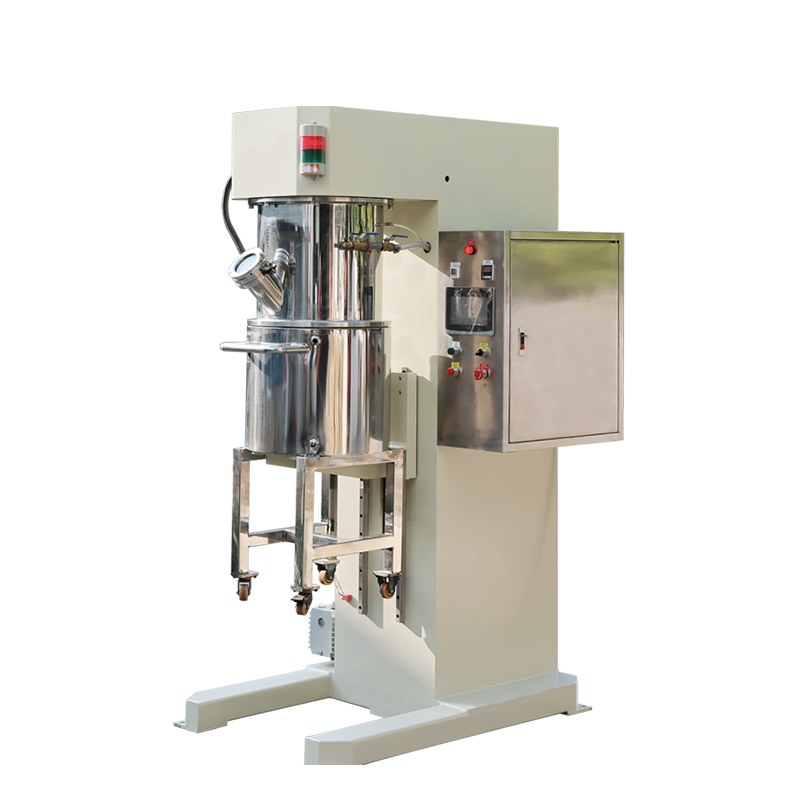
 PILOT SCALE
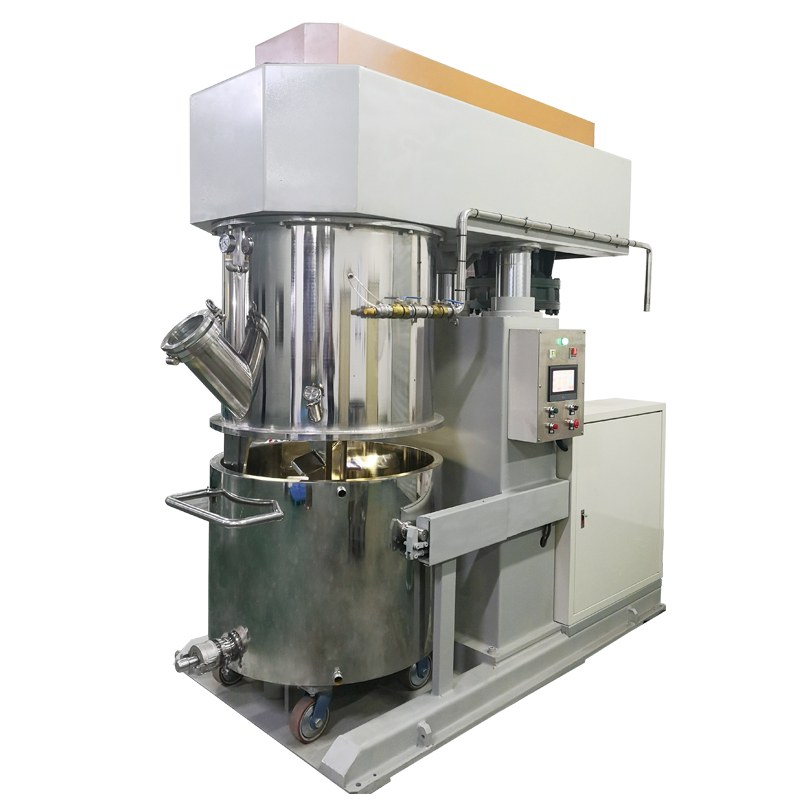
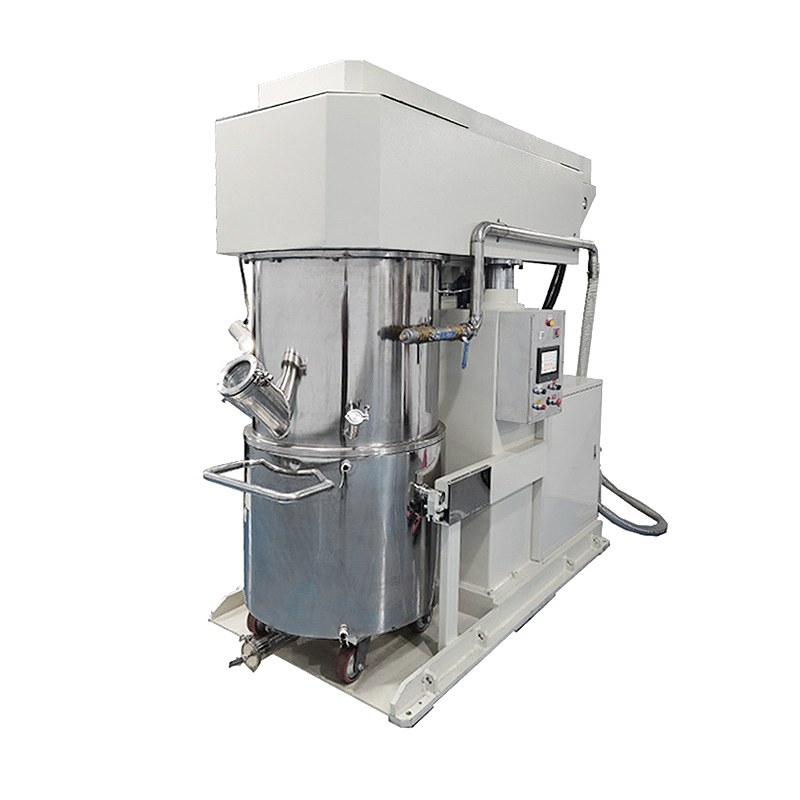
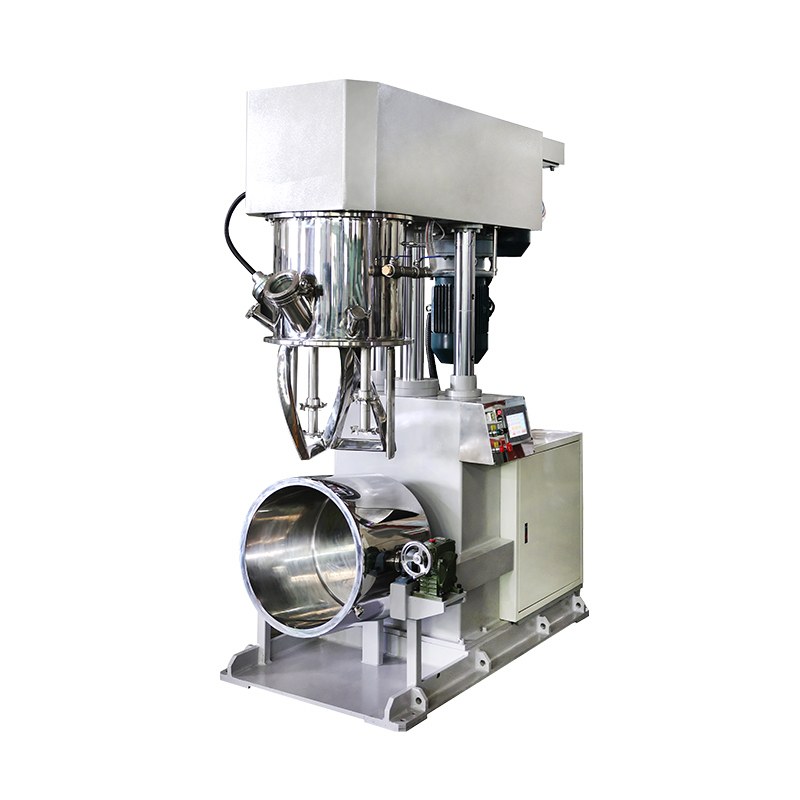
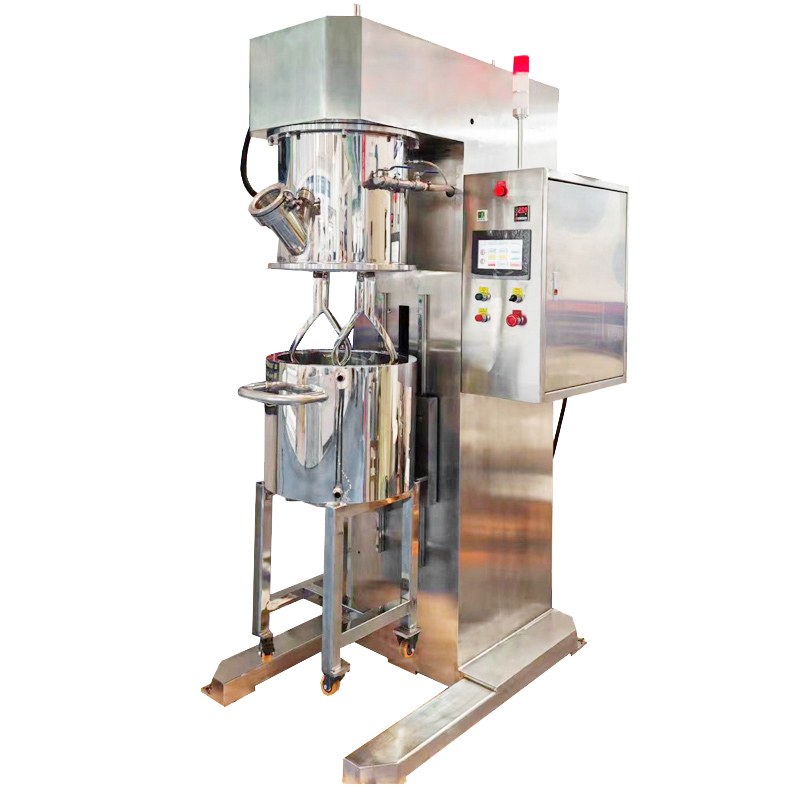
20 L Vacuum Dual Planetary Mixer
MODEL: RJ-JBC-20L // CE CERTIFIED
A 20-liter dual planetary vacuum mixer for high-viscosity technical pastes — conductive adhesives, solder paste, battery slurry and electronic pastes — with weld-free die-cast twist blades, a 11.9 m/s disperser and a jacketed vacuum vessel.
Technical Specifications
Pilot frames that bridge laboratory screening and commercial production without a change of mixing principle.
| Parameter | Specification Value | Engineering Notes |
|---|---|---|
| Total Volume | 20 Liters | Jacketed vacuum vessel |
| Disperser Linear Speed | 11.9 m/s | Maximum at the stated disperser speed |
| Blade Construction | Single-piece die-cast twist blade, weld-free | Folding blade version available |
| Vacuum Instrumentation | Panasonic digital vacuum gauge | Standard on all models |
| Temperature Sensing | PT100 sensor, product contact | Standard on all models |
| Vessel Jacket | Double layer + flow-guide groove | Cooling water or heat-transfer oil |
| Maximum Heating | ≤ 200 °C | External insulation required above 60 °C |
| Control System | Touch-screen HMI + PLC, VFD drive | Recipe storage and repeatable ramp |
Key Design Features
Built for the awkward stage where a formula is settled but the production vessel is not yet justified.
Same Blade Geometry as Production Frames
The 20–50 L frames use the same twin-arm planetary layout and wall scraper as the 100 L and larger vessels, so a batch proven here transfers with a speed adjustment rather than a re-development.
11.9 to 15.1 m/s
Dispersion energy increases with vessel diameter: 11.9 m/s at 20 L, 14.7 m/s at 30 L and 15.1 m/s at 50 L. The planetary arms stay at low speed throughout, which keeps the kneading action consistent.
Cooling and Heating in One Vessel
Double-wall jacket with a bottom flow-guide groove for cooling water or heat-transfer oil. Heating is capped at 200 °C; insulation is fitted at the factory when the process runs above 60 °C.
Bottom or Front, Fixed at Order
Bottom discharge suits a gravity-fed filling line; front discharge suits a vessel served by a press-out unit. The choice is made at order because it changes the vessel fabrication.
Where the Pilot Frames Fit
Typical duty is pilot lots and first commercial batches of high-viscosity technical pastes.
Pilot Production
Batches large enough for customer sampling and field trials, small enough to iterate a formulation without scrapping a tonne of material.
Conductive Adhesive
Vacuum deaeration before the paste is packed into syringes or cartridges, where a single bubble becomes a dispense defect.
Battery Slurry
Anode and cathode mixes at pilot scale, mixed under vacuum to strip air that would otherwise show as coating pinholes.
Thermal Interface Paste
High filler loading pastes need both the folding action of the planetary arms and the shear of the disperser in the same vessel.
Frequently Asked Questions — RJ-VPM-500L
Common engineering inquiries regarding vacuum retention, viscous material discharge, cleanroom compliance, and global FAT sign-off.
Q1. Why is disperser linear speed quoted instead of rpm?
Tip speed, not shaft rpm, sets the shear a paste actually sees. 11.9 m/s is the published maximum for this frame; two machines with different disc diameters running the same rpm give the paste very different energy input.
Q2. Can the same vessel cool and heat?
Yes. The double-wall jacket with its bottom flow-guide groove accepts either cooling water or heat-transfer oil. Heating is limited to 200 °C, and when the process runs above 60 °C the vessel is wrapped with insulation at the factory, which must be declared when ordering.
Q3. What discharge options are there?
Bottom discharge or front discharge, fixed at order. Bottom discharge suits gravity-fed lines; front discharge suits vessels served by a press-out unit or transfer pump.
Related Processing Equipment
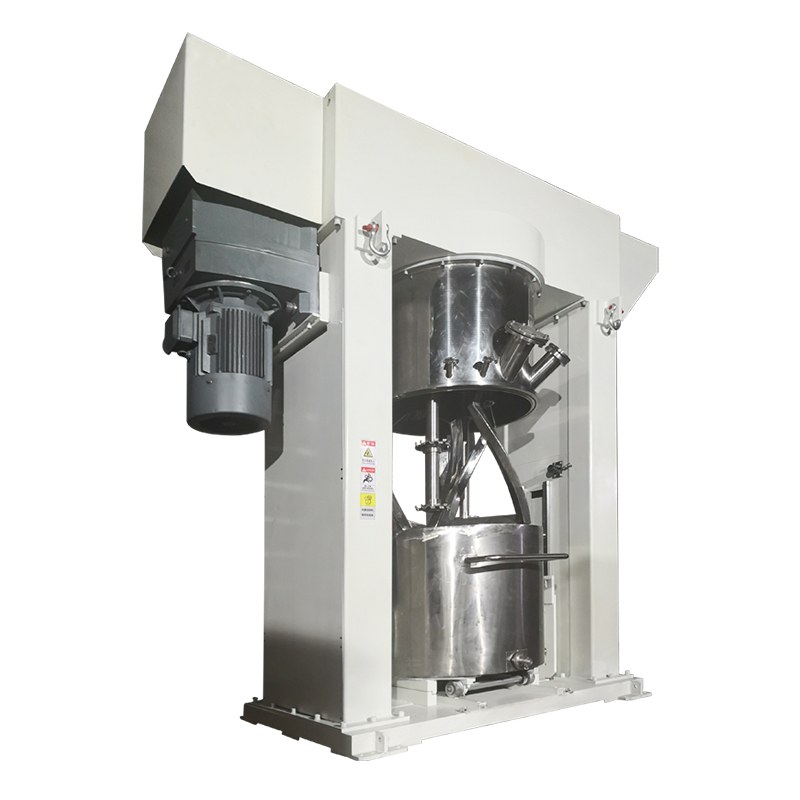
650 L Gantry Vacuum Dual Planetary Mixer
A 650-liter dual planetary vacuum mixer for high-viscosity technical pastes — conductive adhesives, solder paste, battery slurry and electronic pastes — with weld-free die-cast twist blades, a 23.2 m/s disperser and a jacketed vacuum vessel.
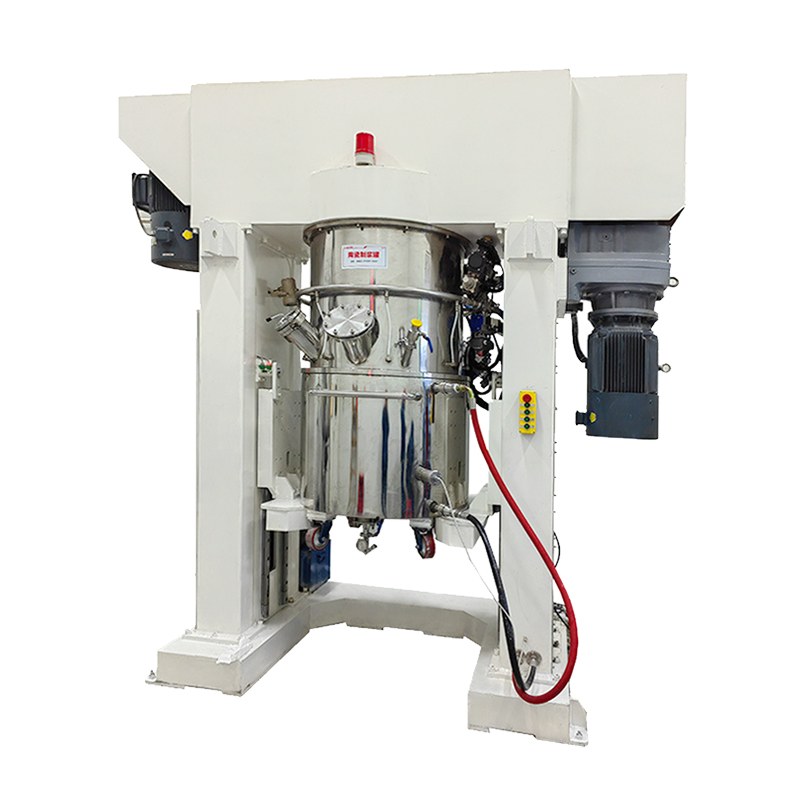
300 L Gantry Vacuum Dual Planetary Mixer
A 300-liter dual planetary vacuum mixer for high-viscosity technical pastes — conductive adhesives, solder paste, battery slurry and electronic pastes — with weld-free die-cast twist blades, a 21 m/s disperser and a jacketed vacuum vessel.