 LAB & PILOT
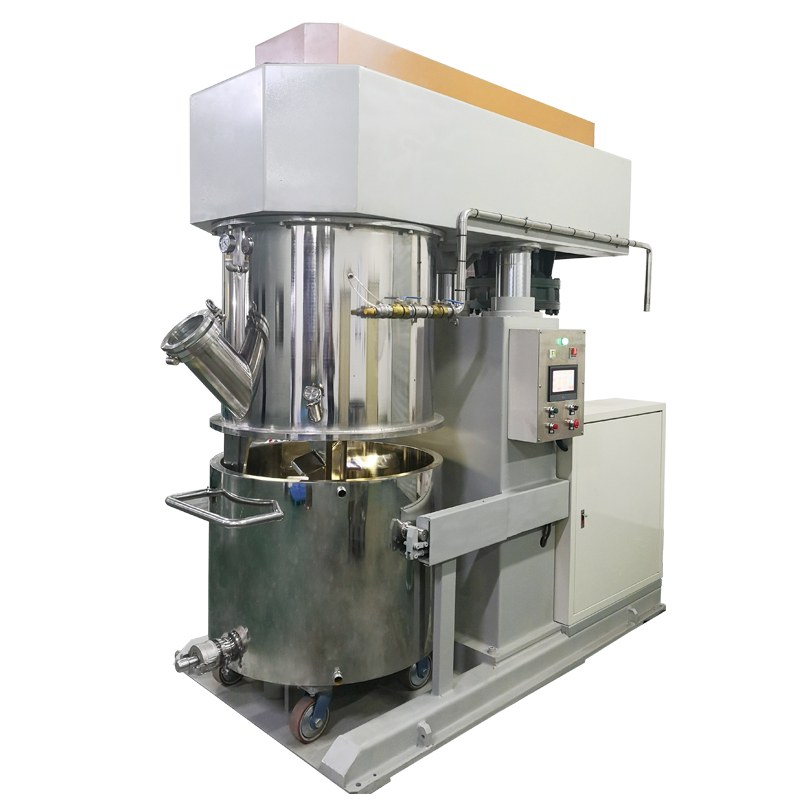
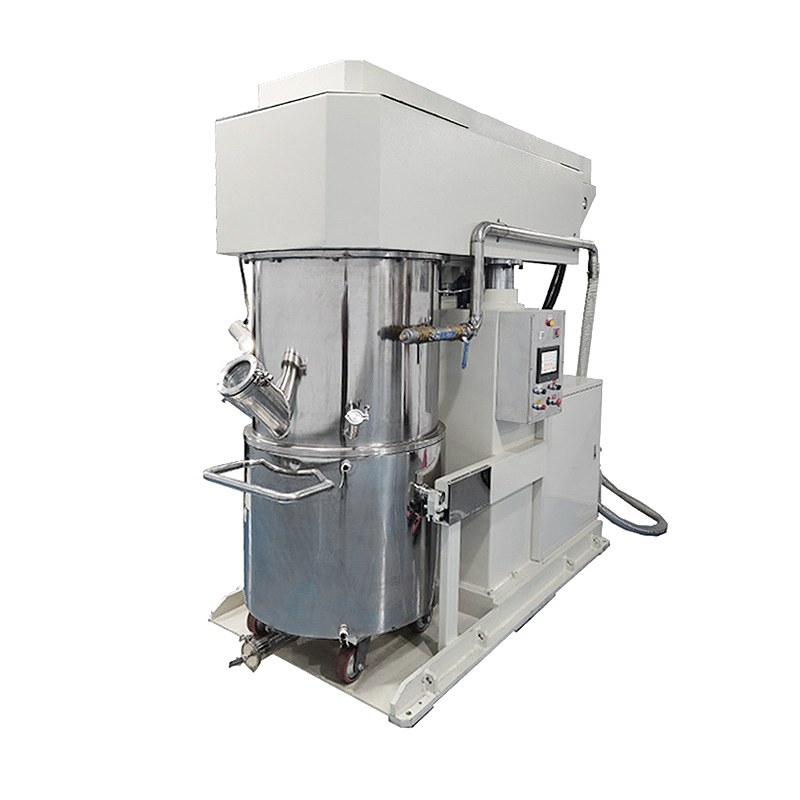
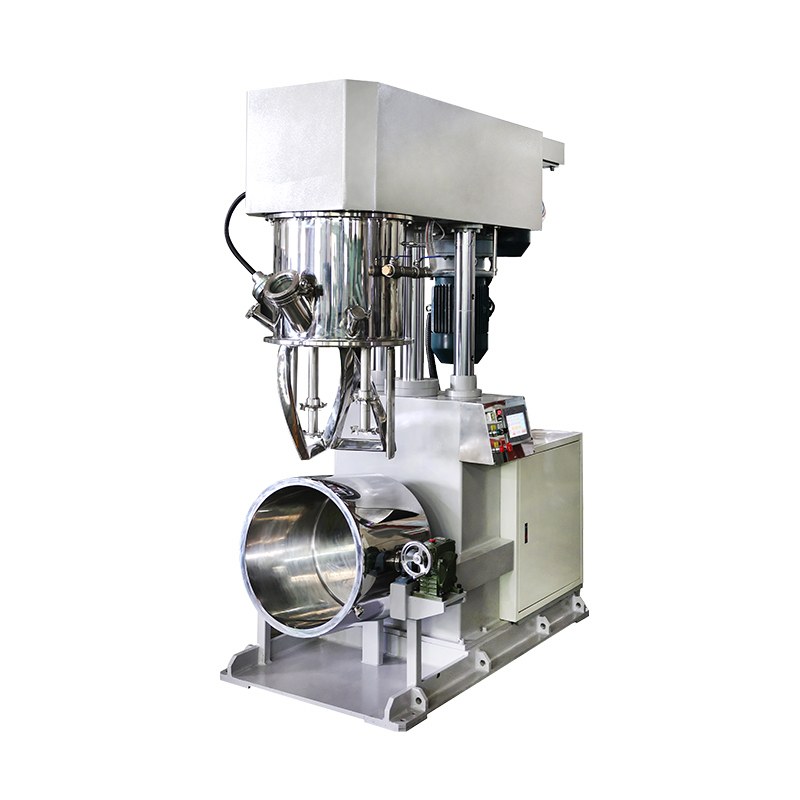
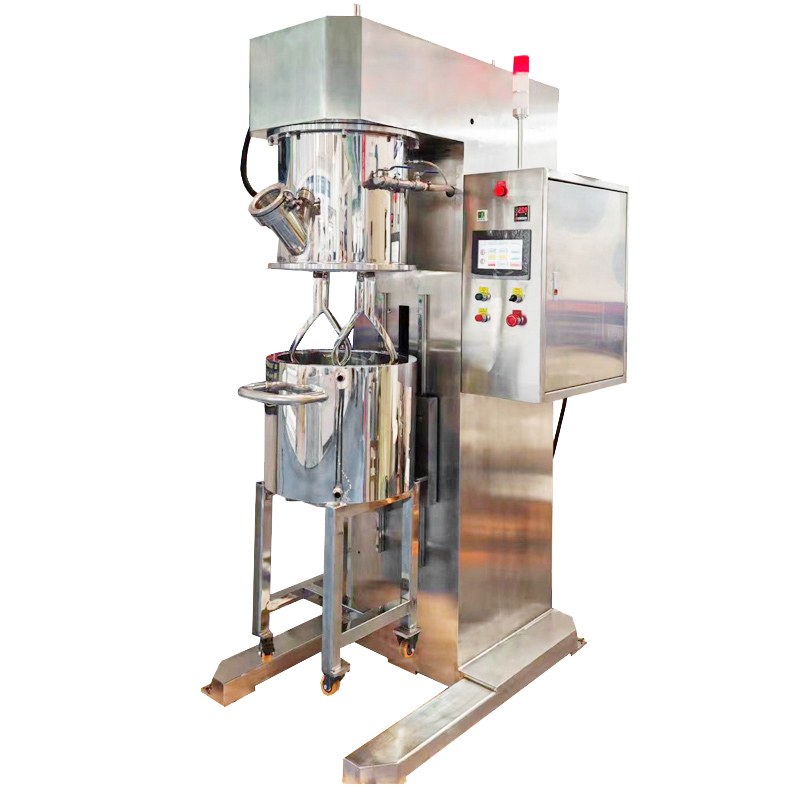
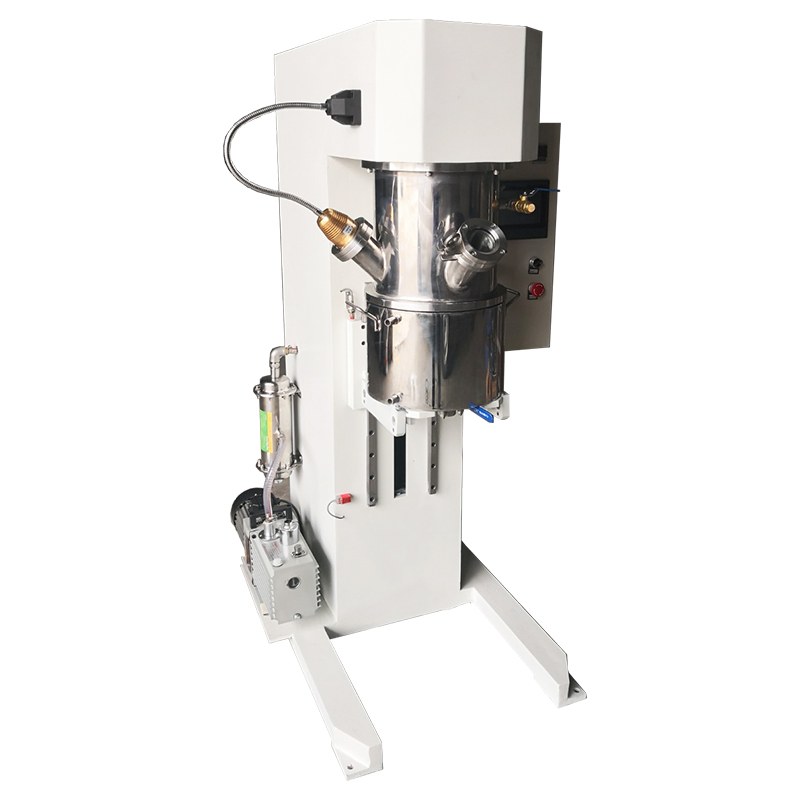
10 L Vacuum Dual Planetary Mixer
MODEL: RJ-JBC-10L // CE CERTIFIED
A 10-liter dual planetary vacuum mixer for high-viscosity technical pastes — conductive adhesives, solder paste, battery slurry and electronic pastes — with weld-free die-cast twist blades, a 10.5 m/s disperser and a jacketed vacuum vessel.
Technical Specifications
Small-frame dual planetary vacuum mixers used to prove a formulation before it moves to a production vessel.
| Parameter | Specification Value | Engineering Notes |
|---|---|---|
| Total Volume | 10 Liters | Jacketed vacuum vessel |
| Disperser Linear Speed | 10.5 m/s | Maximum at the stated disperser speed |
| Blade Construction | Single-piece die-cast twist blade, weld-free | Folding blade version available |
| Vacuum Instrumentation | Panasonic digital vacuum gauge | Standard on all models |
| Temperature Sensing | PT100 sensor, product contact | Standard on all models |
| Vessel Jacket | Double layer + flow-guide groove | Cooling water or heat-transfer oil |
| Maximum Heating | ≤ 200 °C | External insulation required above 60 °C |
| Control System | Touch-screen HMI + PLC, VFD drive | Recipe storage and repeatable ramp |
* The old-site datasheet publishes one grouped figure (10.5 m/s) for the 5 L and 10 L frames. Per-model figures are confirmed on the order drawing.
Key Design Features
Four batch sizes share one mixing geometry, so a result at 2 litres still means something at 10.
One Geometry From 2 to 10 Litres
Two planetary arms orbit the vessel while rotating on their own axes, and a scraper arm turns with the carrier to keep the wall clean. Because the blade-to-wall relationship is identical across the four frames, changing batch size does not change the mixing action.
8.37 to 10.5 m/s
The disperser is sized to each vessel, so linear speed rises with diameter rather than staying fixed. Published figures are grouped for the 2–10 L frames; the value shown here is the figure published for this frame.
Cooling and Heating in One Vessel
A double-wall jacket with a bottom flow-guide groove accepts cooling water or heat-transfer oil. Process temperature is capped at 200 °C, and above 60 °C the vessel is wrapped with insulation at the factory.
Bottom or Front, Fixed at Order
Discharge configuration is decided when the machine is built: bottom discharge for gravity-fed lines, front discharge where the paste is taken off by a press-out unit or transfer pump.
Where the Small Frames Fit
These are the paste families the 2–10 L frames are built for in practice.
Conductive Adhesive
Silver- and carbon-filled adhesives are thixotropic and easy to aerate. Vacuum mixing in the closed vessel removes entrained air before the batch is dispensed into test coupons.
Solder Paste
Metal-powder solder paste needs the powder wetted without being ground finer. The planetary arms fold the paste while the disperser breaks down agglomerates.
Battery Slurry
Gram-to-kilogram screening of anode and cathode formulations before the recipe is committed to a production line.
Electronic Paste
Thermal and electronic pastes benefit from the jacketed vessel holding the batch at a controlled temperature during homogenisation.
Frequently Asked Questions — RJ-VPM-500L
Common engineering inquiries regarding vacuum retention, viscous material discharge, cleanroom compliance, and global FAT sign-off.
Q1. Why is disperser linear speed quoted instead of rpm?
Tip speed, not shaft rpm, sets the shear a paste actually sees. 10.5 m/s is the published maximum for this frame; two machines with different disc diameters running the same rpm give the paste very different energy input.
Q2. Can the same vessel cool and heat?
Yes. The double-wall jacket with its bottom flow-guide groove accepts either cooling water or heat-transfer oil. Heating is limited to 200 °C, and when the process runs above 60 °C the vessel is wrapped with insulation at the factory, which must be declared when ordering.
Q3. What discharge options are there?
Bottom discharge or front discharge, fixed at order. Bottom discharge suits gravity-fed lines; front discharge suits vessels served by a press-out unit or transfer pump.
Related Processing Equipment
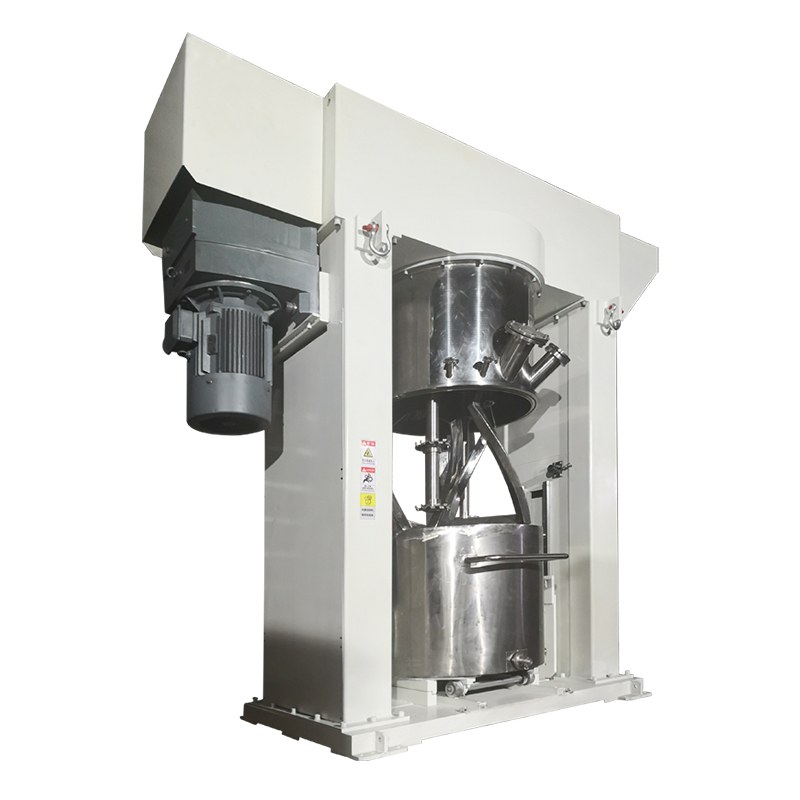
650 L Gantry Vacuum Dual Planetary Mixer
A 650-liter dual planetary vacuum mixer for high-viscosity technical pastes — conductive adhesives, solder paste, battery slurry and electronic pastes — with weld-free die-cast twist blades, a 23.2 m/s disperser and a jacketed vacuum vessel.
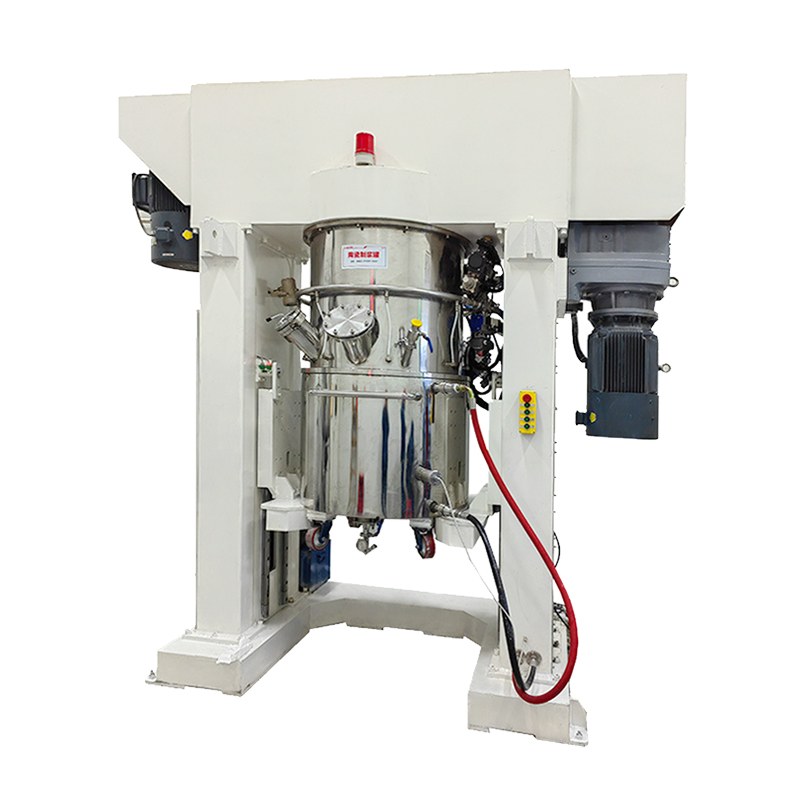
300 L Gantry Vacuum Dual Planetary Mixer
A 300-liter dual planetary vacuum mixer for high-viscosity technical pastes — conductive adhesives, solder paste, battery slurry and electronic pastes — with weld-free die-cast twist blades, a 21 m/s disperser and a jacketed vacuum vessel.