 EXPLOSION-PROOF
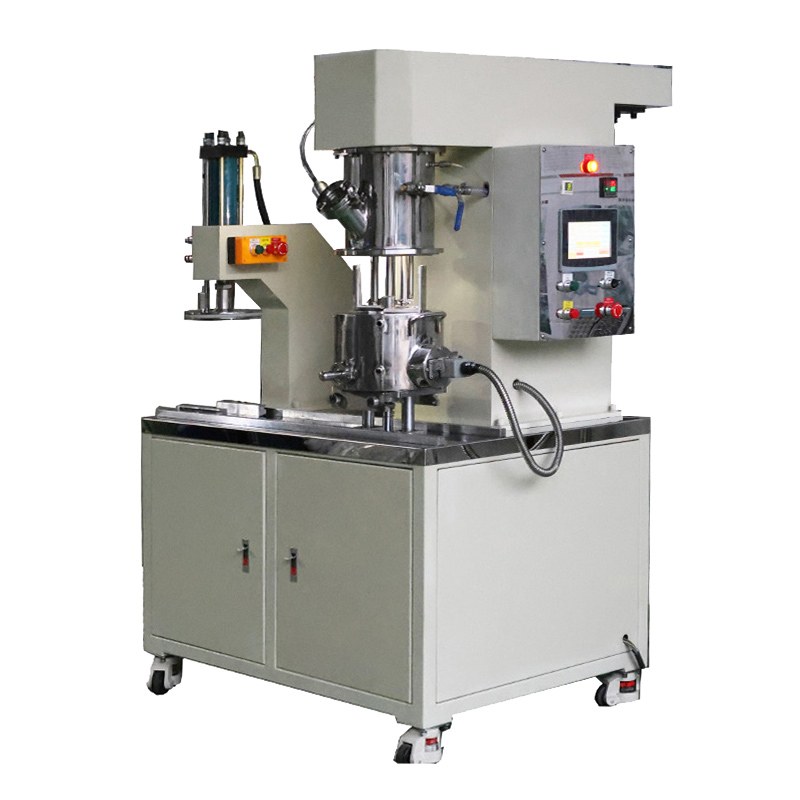
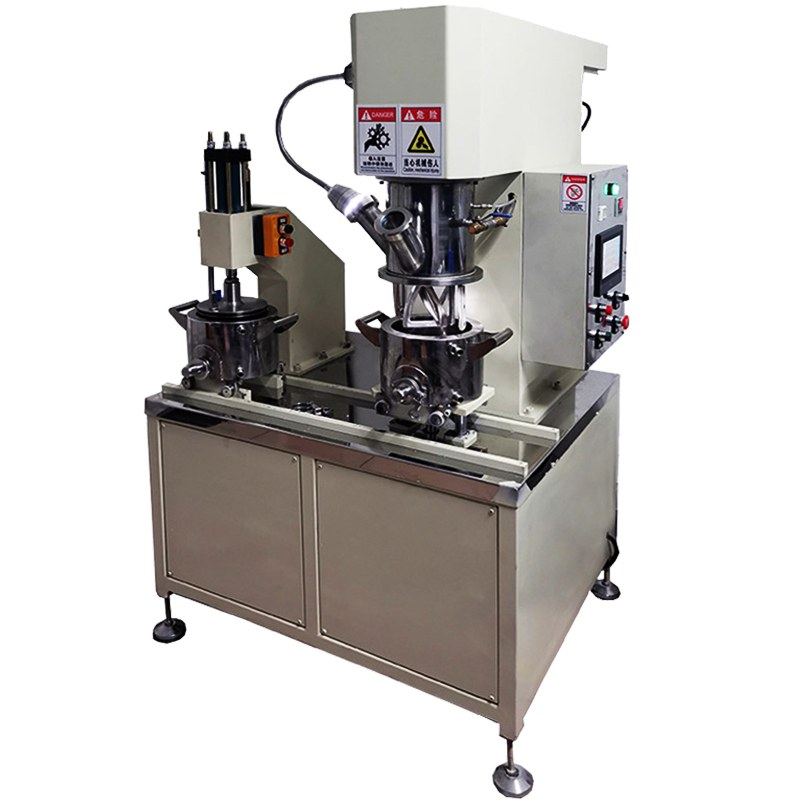
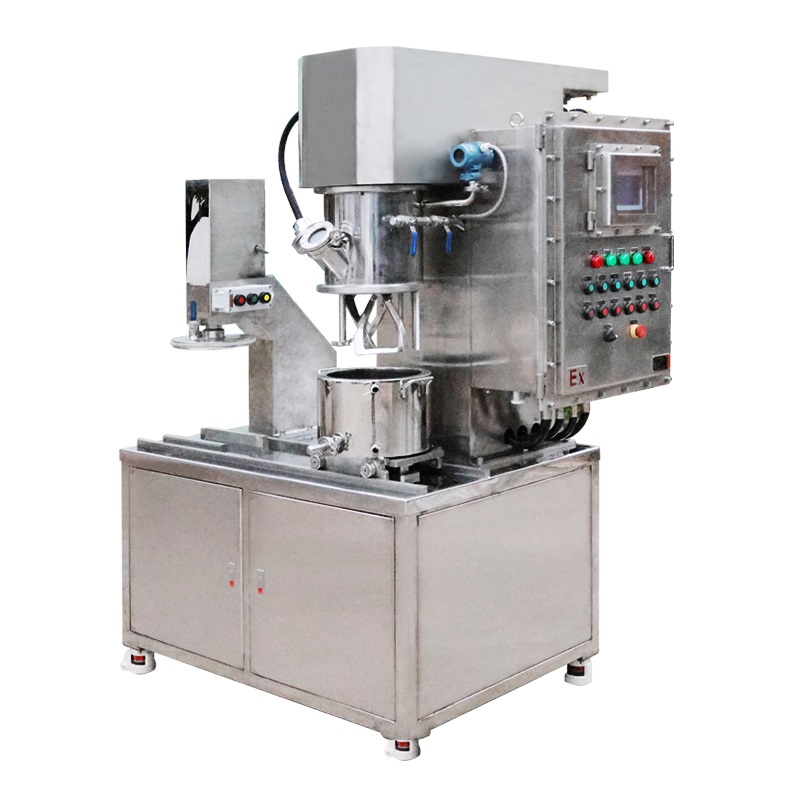
5 L Explosion-Proof Integrated Vacuum Mixer & Discharge Press
CE CERTIFIED
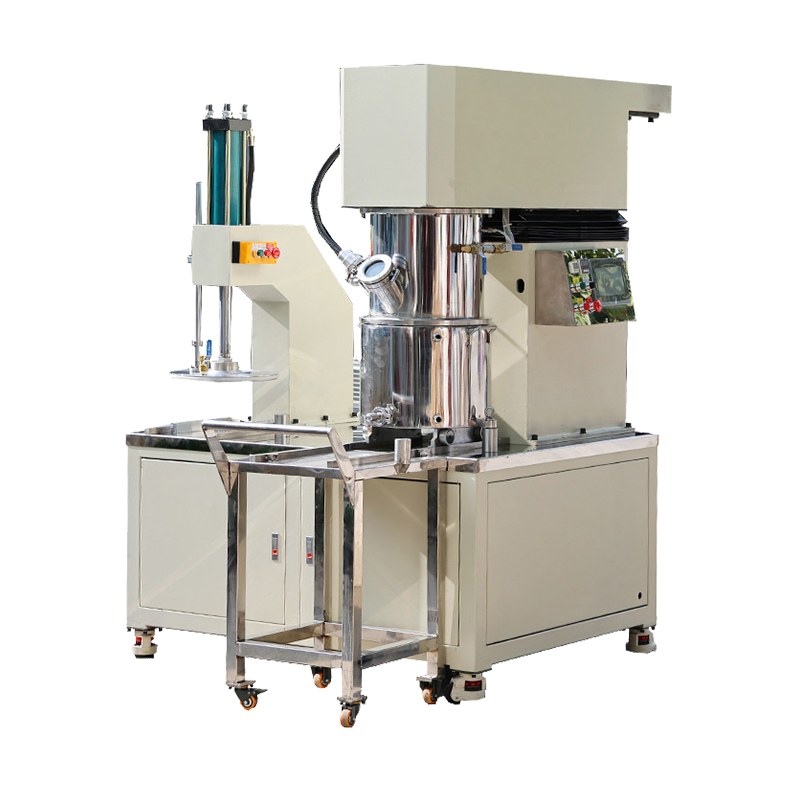
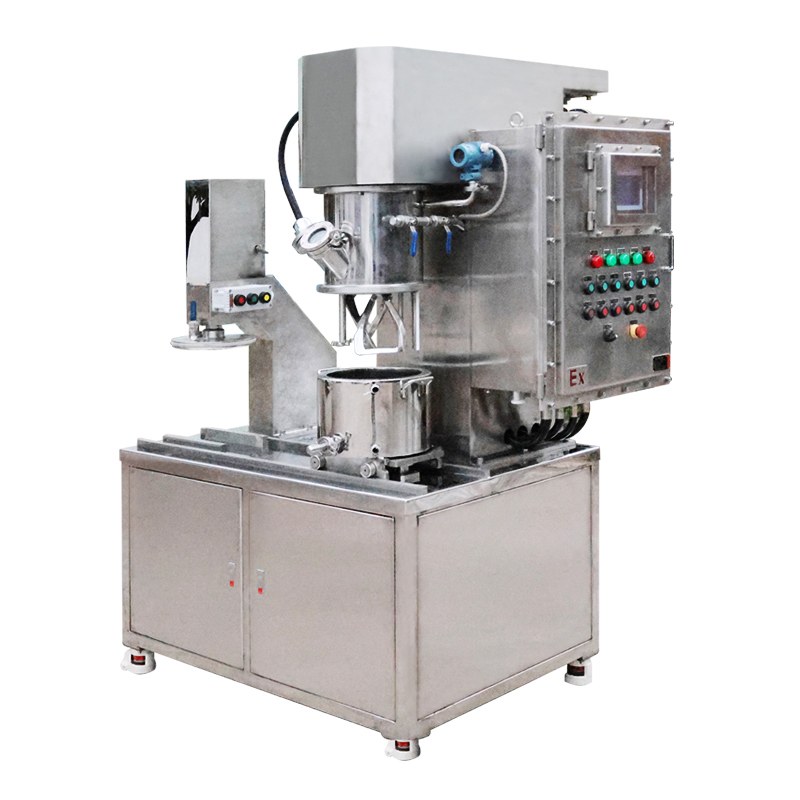
A 5-liter integrated vacuum mixer and discharge press with an explosion-proof electrical build for solvent-bearing pastes — 7 MPa discharge, front discharge and touch-screen PLC control, all on one frame.
Technical Specifications
The 5 L integrated frame built for solvent-bearing systems, where the motor and wiring have to be explosion-proof rather than just sealed.
| Parameter | Specification Value | Engineering Notes |
|---|---|---|
| Batch Volume | 5 L | Mixing and pressing in the same vessel |
| Discharge Cylinder | 7 MPa | Vane pump, integrated into the mixing frame |
| Discharge Direction | Front discharge | Standard for the integrated format |
| Vessel | Jacketed, vacuum-tight | The mixing vessel is the pressing vessel |
| Control System | Touch-screen HMI + PLC | Mix and press sequenced from one screen |
| Electrical Protection | Explosion-proof configuration | Motor, wiring and control enclosure |
| Typical Duty | Solvent-bearing paste | Where a sealed motor is not sufficient |
Key Design Features
Same mixing and pressing format as the standard 5 L frame, with the electrical build changed for solvent duty.
Changed at the Electrical Level
A solvent-bearing paste needs more than a gasket: the drive motor, the wiring and the control enclosure are all specified for the hazardous zone. This is why the explosion-proof route is cheaper to order than to retrofit.
Vane Pump on the Same Frame
Discharge pressure and geometry are unchanged from the standard 5 L unit — 7 MPa from a vane pump, front discharge.
Solvent Loss Under Vacuum
Under vacuum a solvent evaporates at a lower temperature, so the jacket is often cooling during deaeration even when the recipe is nominally a warm mix.
Sequenced Mix, Vacuum and Press
PLC control sequences the vacuum hold and press stroke; the explosion-proof enclosure houses the same operator interface.
Where the Explosion-Proof Frame Fits
Solvent-based systems where the electrical classification, not the mixing duty, decides the machine.
Solvent-Based Adhesive
Adhesives cut with an organic solvent, where vapour in the vessel headspace sets the zone classification.
Conductive Ink
Solvent-carried inks and pastes that need vacuum deaeration before printing.
Small-Batch Production
Short runs where the batch value justifies a dedicated explosion-proof frame.
Customer Samples
Matched samples produced under the same electrical classification as the customer's own line.
Frequently Asked Questions — RJ-VPM-500L
Common engineering inquiries regarding vacuum retention, viscous material discharge, cleanroom compliance, and global FAT sign-off.
Q1. What exactly is explosion-proof on this machine?
The drive motor, the wiring and the control enclosure. The mixing and pressing format is the same as the standard 5 L integrated unit; what changes is the electrical build for the hazardous zone.
Q2. Can a standard 5 L unit be converted later?
It can, but it is more expensive than ordering it correctly. The motor, cable routing and enclosure all change, so the classification has to be declared at quotation.
Q3. Does vacuum deaeration still work with a solvent?
Yes, but the vacuum has to be staged: pulling down too fast boils the solvent and foams the batch instead of releasing entrained air. The jacket is usually cooling during the hold.
Related Processing Equipment